The Recursive Refiner Pack
Vague prompts produce average results. The Recursive Refiner forces AI to audit, critique, and perfect its own work using adversarial personas. Claim your 100+ page manual and 6-prompt JSON vault today.
Adversarial Critique
Assign internal critics to catch bugs, gaps, and corporate jargon.
3-Stage Serialization
Generates Draft, Critique, and Final Version in a single pass.
1-Click Vault Import
Optimized for instant deployment into your on-site Prompt Vault tool.
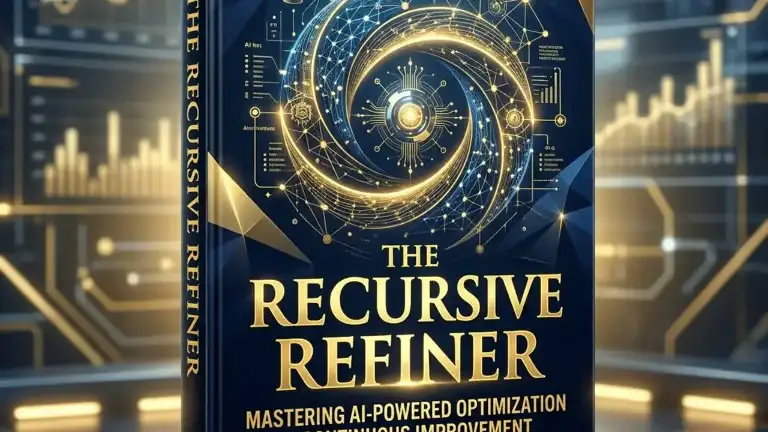
The Refiner Vault Preview
Experience the precision of self-correcting AI prompts live. The first three prompts—Code Architect, Content Editor, and Data Insights—are completely free to preview and customize.
Claim Your Recursive Refiner
Get immediate access to the complete 100-page PDF masterclass and the 6-prompt JSON library for $19.99. No subscriptions, no hidden constraints.
One-Click Import
Import the complete 6-prompt workspace directly into your local database in seconds.
6 Core Archetypes
Includes production-ready blueprints for Code, Writing, Data Insights, Translation, Ads, and Academics.
100+ Page Manual
Beautifully typeset PDF guide outlining the philosophy, E-E-A-T structures, and advanced variables.
Frequently Asked Questions
Common questions about self-correcting prompting and prompt architecture.
What is adversarial prompting?
Adversarial prompting is a structured prompt engineering technique where an LLM is assigned two conflicting personas—a Drafting Role and a Critique Role. This forces the model to self-audit and eliminate edge cases before presenting the final result.
Why is the critique step necessary?
LLMs are optimized for word association, meaning first drafts often contain hallucinations, weak logic, or corporate jargon. Adding a structured Critique Phase forces the model to challenge its assumptions, increasing output fidelity by up to 30%.
Which AI models work best with this?
The framework is optimized for highly capable reasoning engines like Claude 3.5 Sonnet, GPT-4o, and Gemini 1.5 Pro. These models possess the semantic capacity to process complex, multi-role instructions in a single pass.
Can I customize the options and roles?
Absolutely. The prompts are fully variable-driven. You can customize variables like {{DraftingRole}}, {{CritiqueRole}}, and {{Language}} inside the Prompt Vault UI to fit your industry standards perfectly.